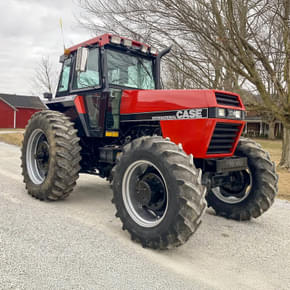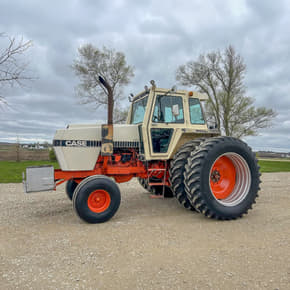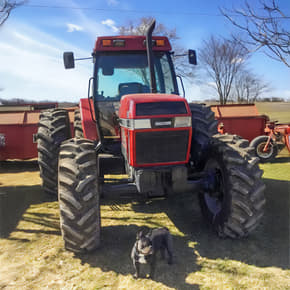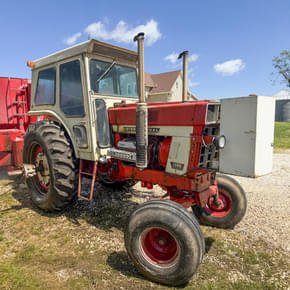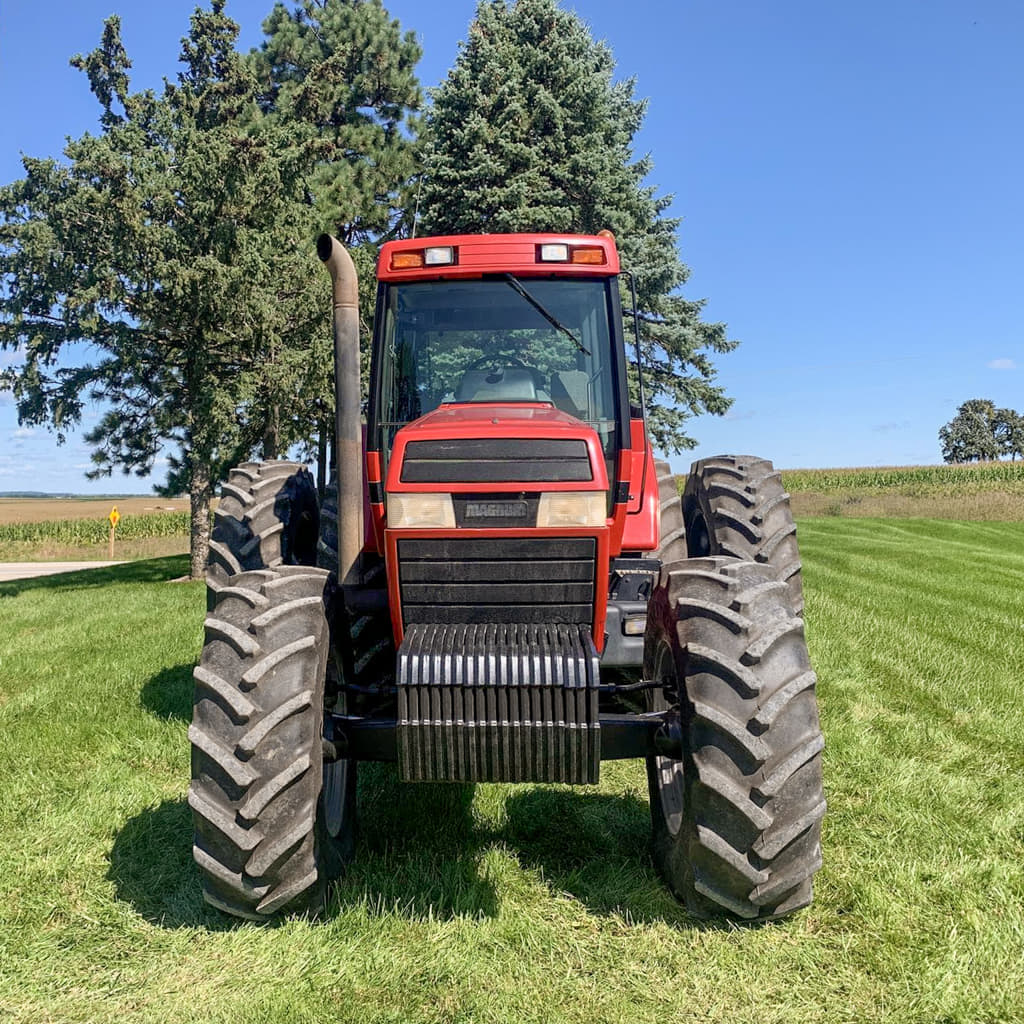
Case IH 7220 listings on Tractor Zoom
By the early 1990s, Case IH had a good problem on its hands: the Magnum name was already becoming shorthand for “big horsepower that doesn’t babysit you.” The original 7100-series Magnums (introduced for 1988 model-year sales) had landed with farmers because they felt modern without feeling fragile—strong driveline, straightforward layout, and a full powershift that made competing tractors feel behind the curve. The Magnum had two things that really separated it from the pack: an industry-first standard 18-speed full powershift and a cab that reset expectations for sound and visibility.
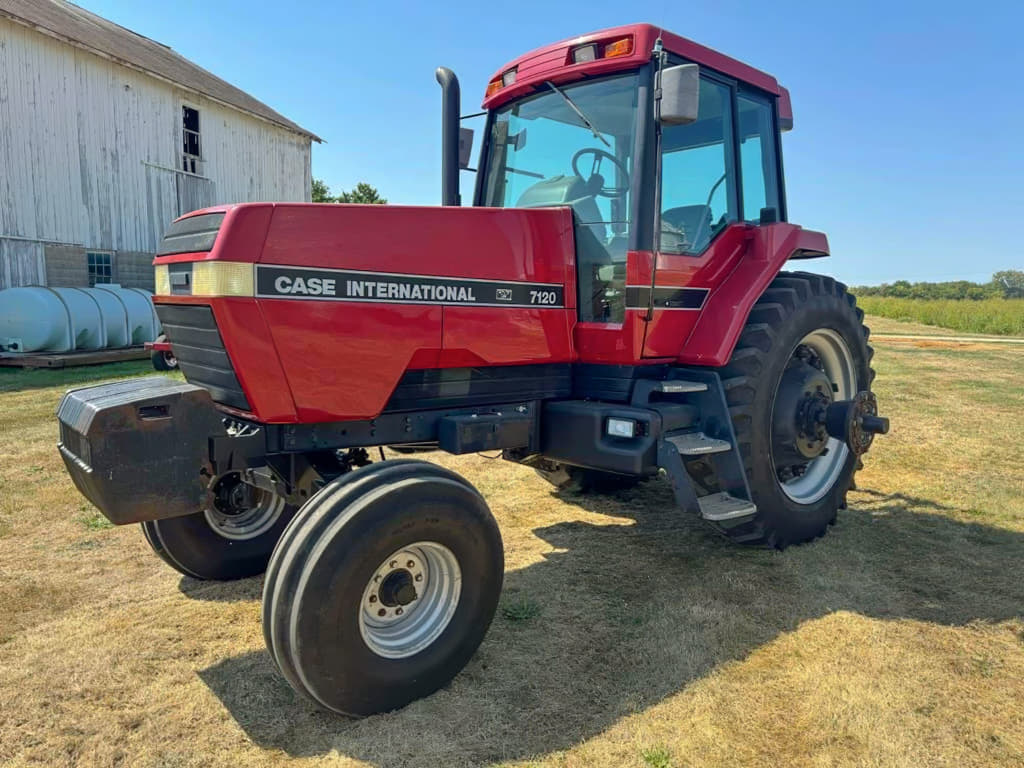
I’m a bourbon guy, and one thing you learn pretty quickly is that age doesn’t change the recipe—it changes the edges. A young bourbon can be good, but give it some time in the barrel and it usually gets smoother, more balanced, more confident in what it is. The Magnum line went through something pretty similar. The Case IH 7200-series didn’t show up as a clean-sheet reinvention. It arrived as a deliberate refinement—an “act two” tractor in a line that already had very solid footing.
Why the 7200-series existed at all
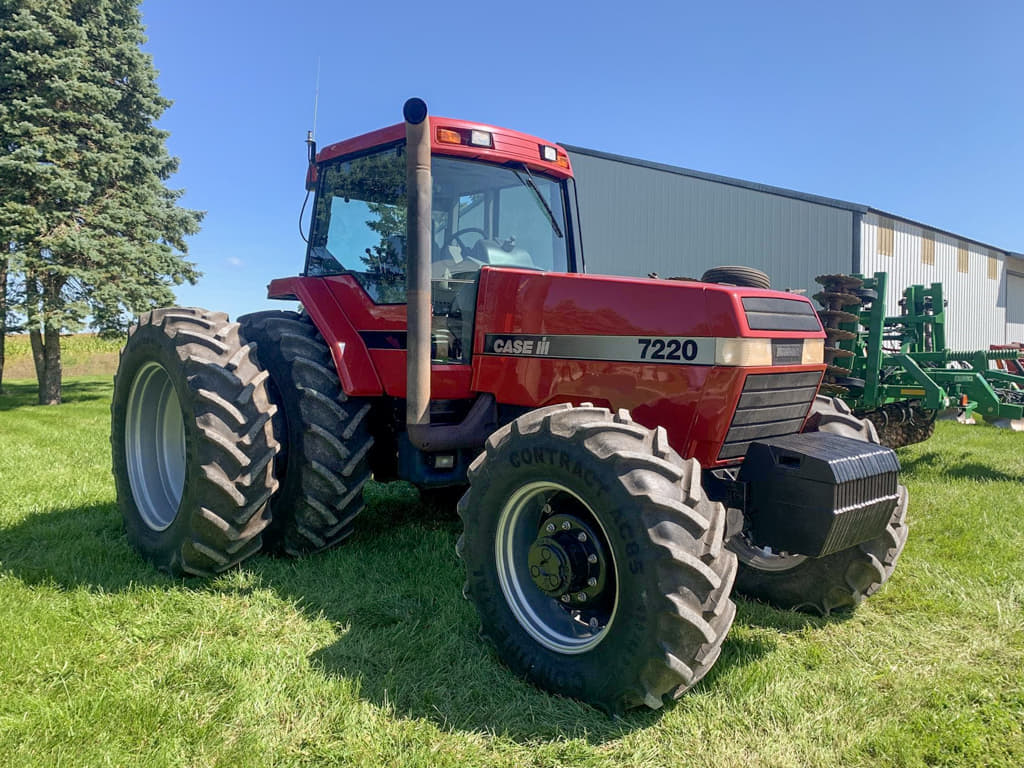
The first-generation Magnum 7100-series lineup proved the concept: five core models (7110 through 7140, with the 7150 arriving for the 1990 model year) built around the same basic architecture, with variations in engines and driveline pieces to hit the horsepower steps farmers actually bought. The recipe worked. But by the early-to-mid ’90s, the market was shifting. Farmers wanted more hydraulic capability for larger implements, better ergonomics for long days, and MFWD that could put power down without turning every spring into a tire budget crisis.
Case IH’s answer was the 7200-series. It was an evolution that kept the Magnum’s core identity (big-frame row-crop tractor, powershift, simple serviceability) while updating the details that matter in real life: hydraulics, controls, and the overall “feel” of the tractor in a mixed-use operation. The 7220 landed in the middle of that lineup, offered as both 2WD and MFWD, and built at Racine, Wisconsin—Magnum country.
In bourbon terms, this was the point where the Magnum stopped being “new” and started being…well-rested.
The 7220: the one that was always hooked to something…
On paper, the 7220 is easy to describe: produced from 1994–1996, tested at about 169 PTO horsepower, powered by a turbocharged CDC 8.3L six-cylinder diesel, and usually backed by an 18-speed full powershift (there was also an optional creeper gearbox for specialty work). In practice, that spec sheet explains why the 7220 became such a fixture on row-crop farms and livestock operations that needed one tractor to wear a lot of hats.
It sat in that sweet spot where you could:
-
pull a reasonably sized planter or baler without feeling anemic in the power department,
-
run PTO loads (grinding, chopping, big augers) without cooking the tractor,
-
and still be nimble enough to do real work around the yard when needed.
And when configured as MFWD—what most buyers wanted by the mid-’90s—it could translate horsepower into traction in a way that 2WD tractors simply couldn’t match once implements got wider and heavier.
Not the biggest Magnum. Not the smallest. Just… a really well-balanced pour.
What made it a Magnum…
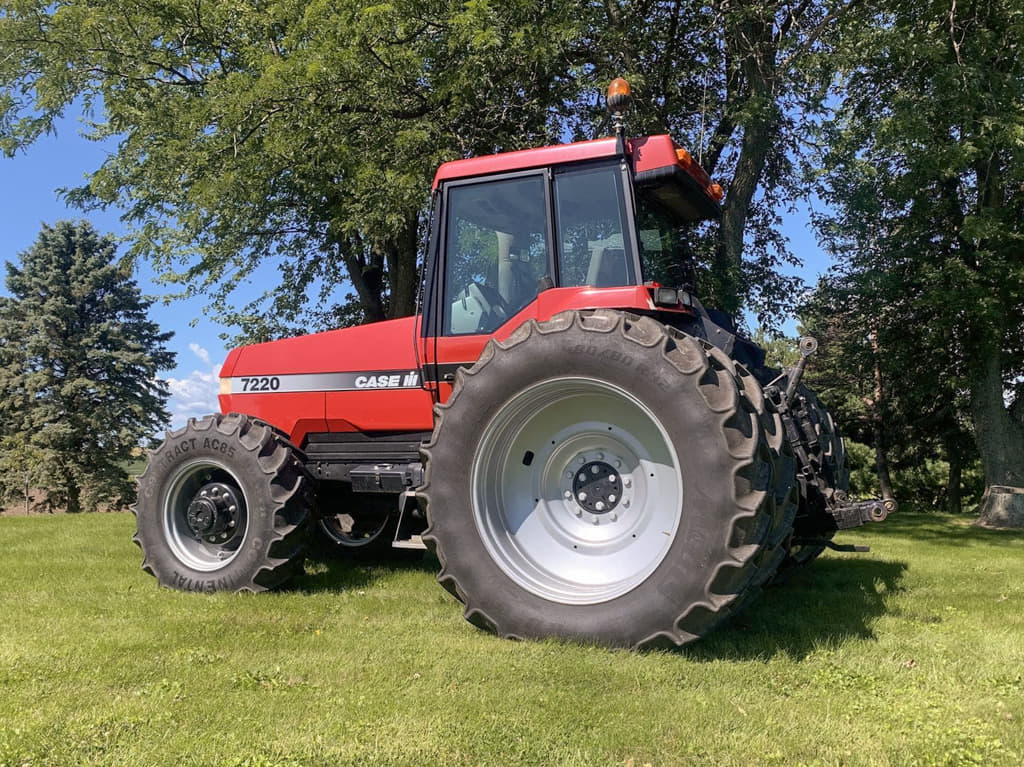
1) The right engine partnership.
One of the smartest moves Case ever made started when Tom Guendel and Cummins CEO Henry Schacht bumped into each other at a trade show in the late ’70s. A year or two later, the Consolidated Diesel Corporation partnership was born. Not long after that, engines were rolling off the line—and by the time the Magnum was ready, the turbocharged 8.3L was ready too. A big, simple inline-six with mechanical injection, it’s proven to be the kind of engine that can take a lot of abuse. Same recipe. Proven ingredients.
2) The transmission that defined the family.
The Magnum’s 18-speed powershift wasn’t just a brochure bullet point—it was something farmers felt right away. As standard equipment, it was an industry-first and pushed competitors to respond. By the time the 7220 came along, incremental refinements meant smoother shifts across fieldwork, transport, and PTO jobs, with fewer compromises. Fewer sharp edges, if you will.
3) Hydraulics that matched bigger implements.
One of the most practical 7220 upgrades—and one reason the 7200s have aged as well as they have—is hydraulic capability. The 7220 runs a closed-center system with up to 29 gpm total flow and 22 gpm to 2–4 remotes, depending on how it was optioned. For the time, that was a meaningful step forward, and it can still be pretty useful on the farm today.
4) Cab and usability improvements that kept the Magnum reputation intact.
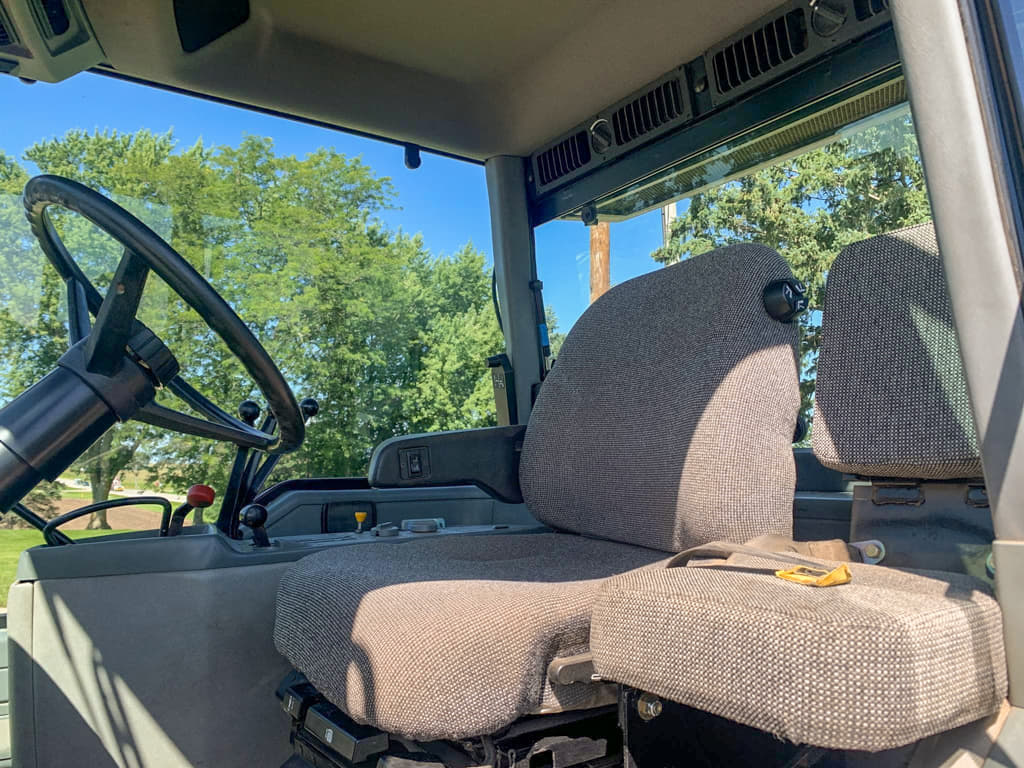
Magnum cabs were already known for being quiet and comfortable for the era. Furthermore, you could see out of them! By the time the 7200-series arrived, “cab comfort” wasn’t an afterthought anymore—it was part of the Magnum’s DNA, and one of the ways these tractors justified their place as primary power units on the farm.
Development philosophy: improve what farmers already trusted
The 7200’s development was never about a radical technology leap. It’s about Case IH doubling down on what the Magnum did right in the first place—then methodically smoothing the edges as expectations (and the competition) moved forward. The 7200-series kept the good stuff and made it better: stronger hydraulics, refined controls, and, in general, a more polished day-to-day operating experience.
And that’s the real reason the 7220 has stayed “Interesting Iron.” It isn’t quirky. It isn’t rare. It’s just really, really good—and it lives in a horsepower class that real farms used every single day.
The legacy: why they’re still popular today
There are tractors that become popular because they were oddballs, and tractors that become desirable because they were so good at what they did. The Case IH 7220 leans hard toward the second category. To me, it sits right in the heart of “I need a tractor that works as hard as I do.”. It represents a moment when horsepower, durability, and comfort converged without the complexity that later decades would pile on. Truly a golden age of farm equipment, y’know?
At the end of the day, these machines are still popular for a reason. They’re just that good at what they do!
The one you can buy at auction: Tom’s baby…
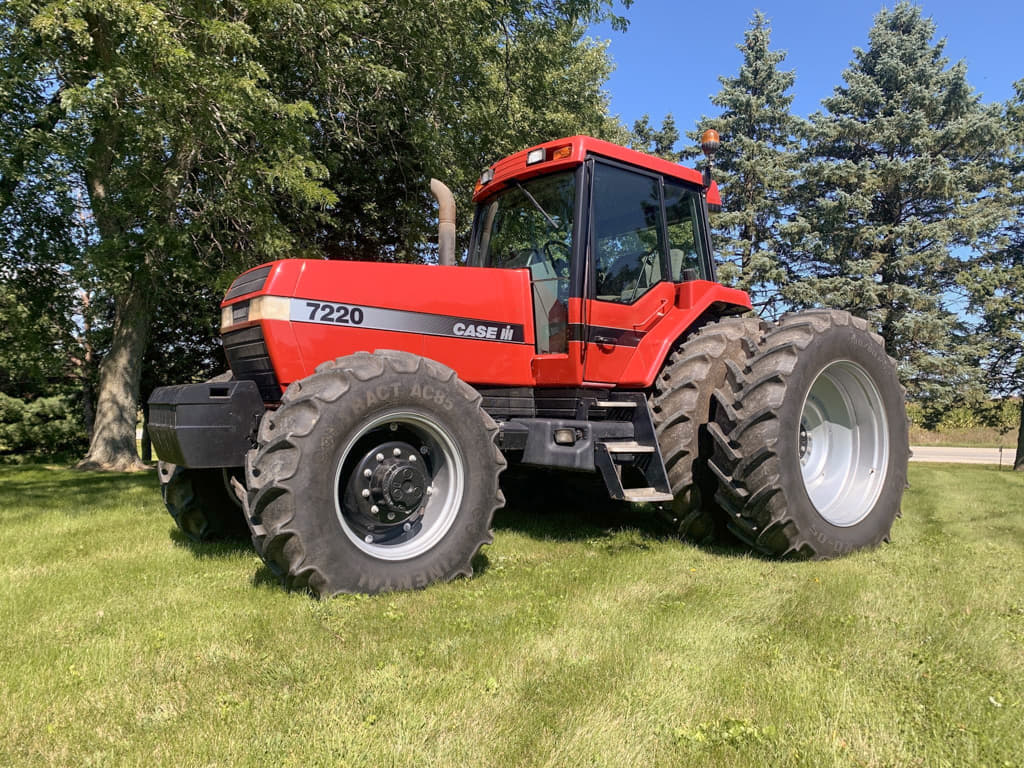
This Case IH 7220 is one of the nicest ones I’ve seen in a long time. It’s a two-owner tractor in Ripon, Wisconsin, originally sold new by Bohn Implement in nearby Berlin back in 1996. Today it shows just over 4,300 original hours, and it still wears its original paint—and it shows.
The tractor belongs to Tom Dudzinski, and I had a chance to catch up with him a couple weeks ago. He farms a little ground and is the fifth generation in his family to do it. When he needed a bigger tractor about 26 years ago, he found this 7220, fell in love with it, and brought it home. It was his baby then, and it’s still his baby now.
Tom told me he doesn’t believe this tractor has ever spent a night outside since he’s owned it. That’s a claim you hear a lot at auctions, and usually you take it with a grain of salt. However, in this case, the condition of the original paint makes a pretty convincing argument. He also said it was waxed every year, and again, the shine kind of speaks for itself.
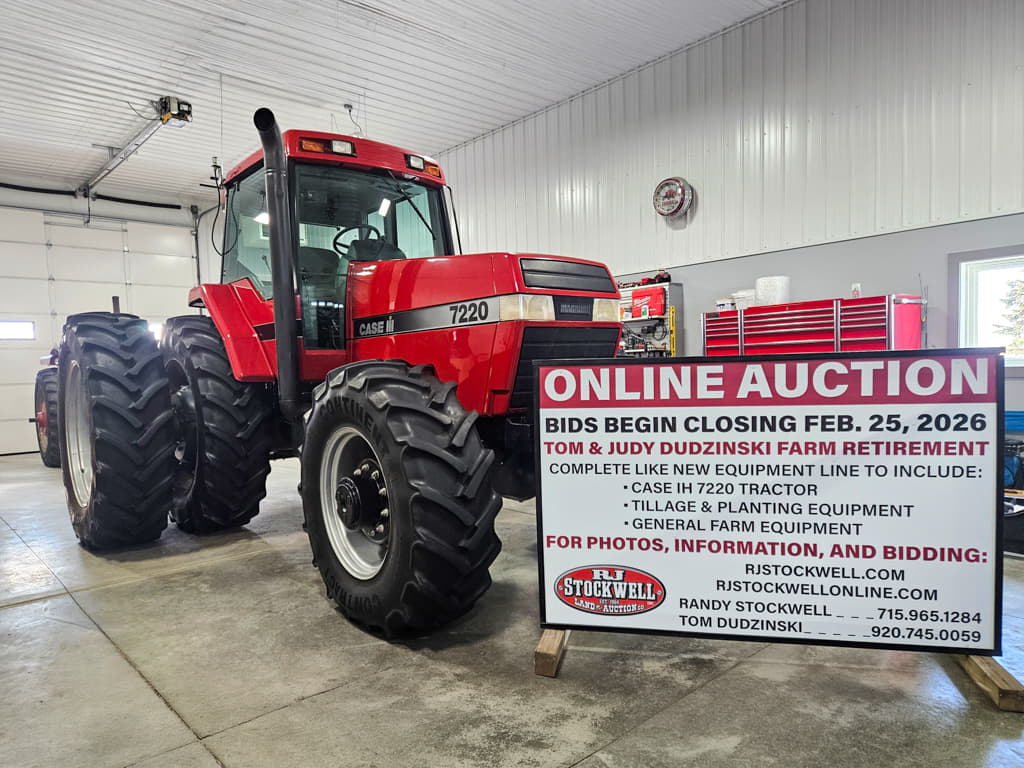
It’s been a good tractor to him. And when we talked about it leaving, you could hear it in his voice—this isn’t an easy sale.
The farm has been more of a hobby than a business, a place to unwind and stay connected to the ground his family has worked for generations. But like a lot of folks are finding out, it’s hard to keep a hobby when it gets too expensive to enjoy. So as much as he hates to see it go, it’s time for this 7220 to head to a farm where it can keep doing what it was built to do.
What’ll it bring?
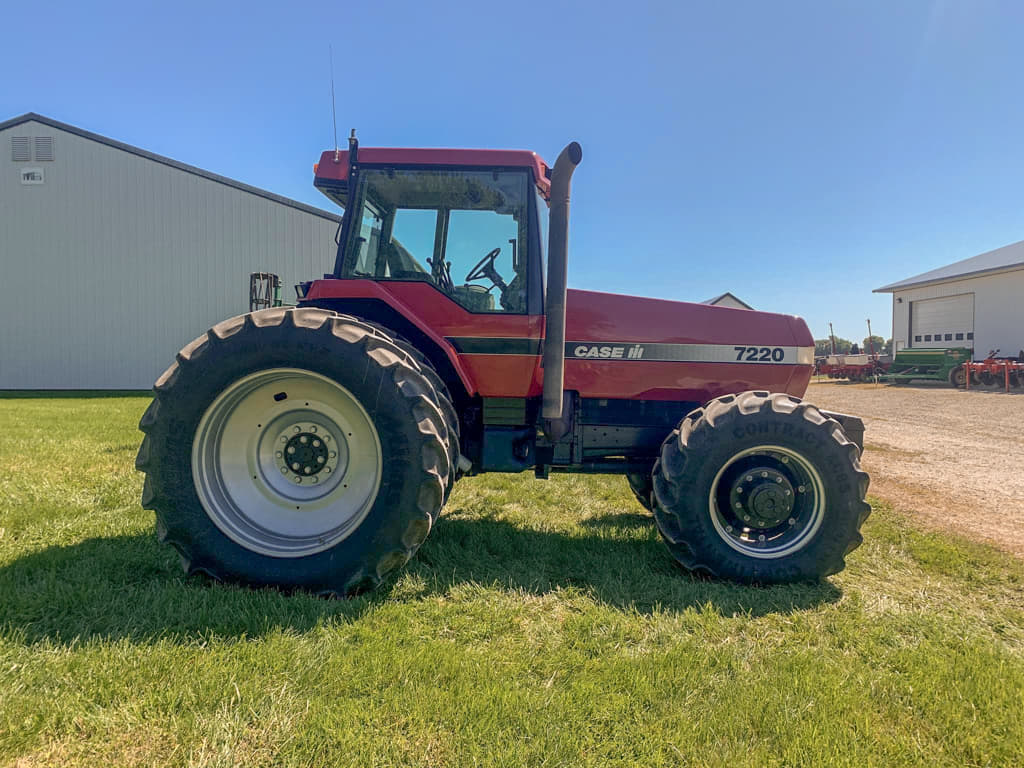
At the end of the day, this tractor has a lot going for it. It’s been well cared for by its owner and well-represented by the auctioneer. When I checked our Tractor Zoom Pro database, it was actually hard to find recent comparables to estimate what it could bring–mainly because of the condition. Nice originals like this one don’t turn up every day, because so many of these tractors have been worked so hard. Farmers hang on to them forever, because they’re such useful machines. So, when one does show up, it doesn’t go unnoticed.
The last one I could find that had similar hours on it and was in the same condition sold for $71,500 a few years ago on a Sullivan consignment auction. And although the market isn’t as high as it once was, I wouldn’t be one bit surprised if this one comes fairly close to it. It’s a testament to taking good care of your equipment, y’know? Either way, the bidding closes on the 25th, and it’ll be interesting to see where this one ends up landing!
Here’s the link to the auction listing. Check out the photos; she’s a beauty!
Or, if you’re looking for Boxcar Magnums in general, here’s what’s listed on Tractor Zoom right now.