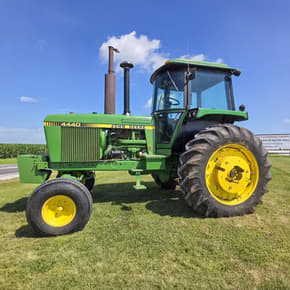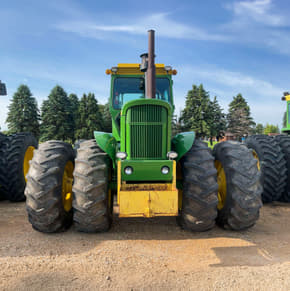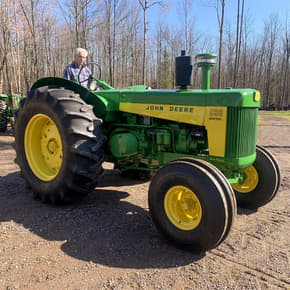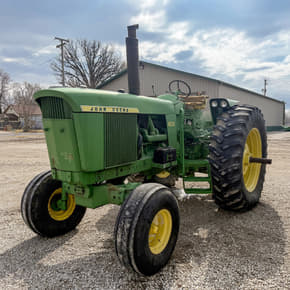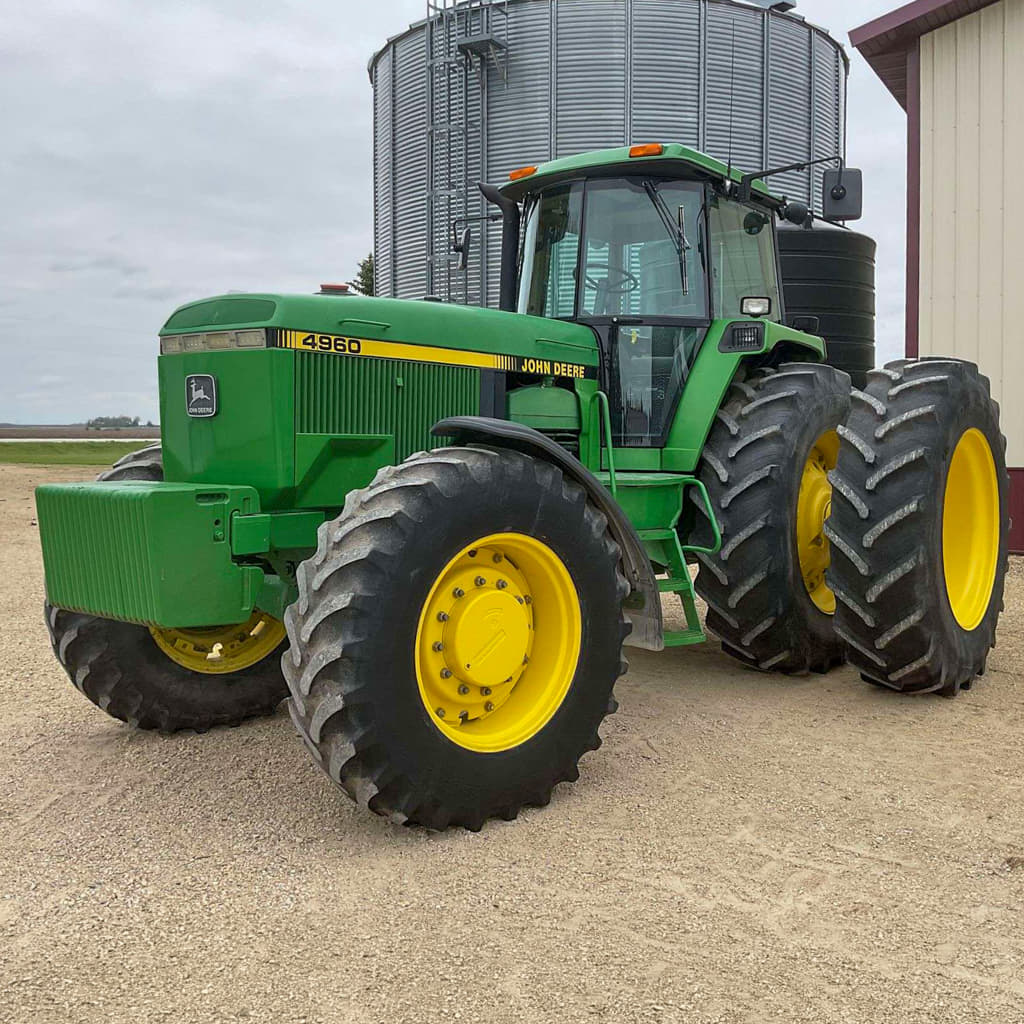
John Deere 4960 listings on TZ
There are certain tractors where everything seems to come together at just about the right time. The engineers have worked out most of the bugs. They’ve had a few generations to refine things. And the finished product feels noticeably better than what came before it. For a lot of Deere guys, especially the ones who like the large-frame row crops, the John Deere 4960 is one of those tractors.
It wasn’t a completely new design. Far from it. By the time the 4960 arrived, Deere had spent nearly two decades refining the basic Sound Gard formula. The 60-Series tractors were the Sound Gard’s last ride into the sunset before Deere brought the 8000-Series to market.
Deere finally cleared the view
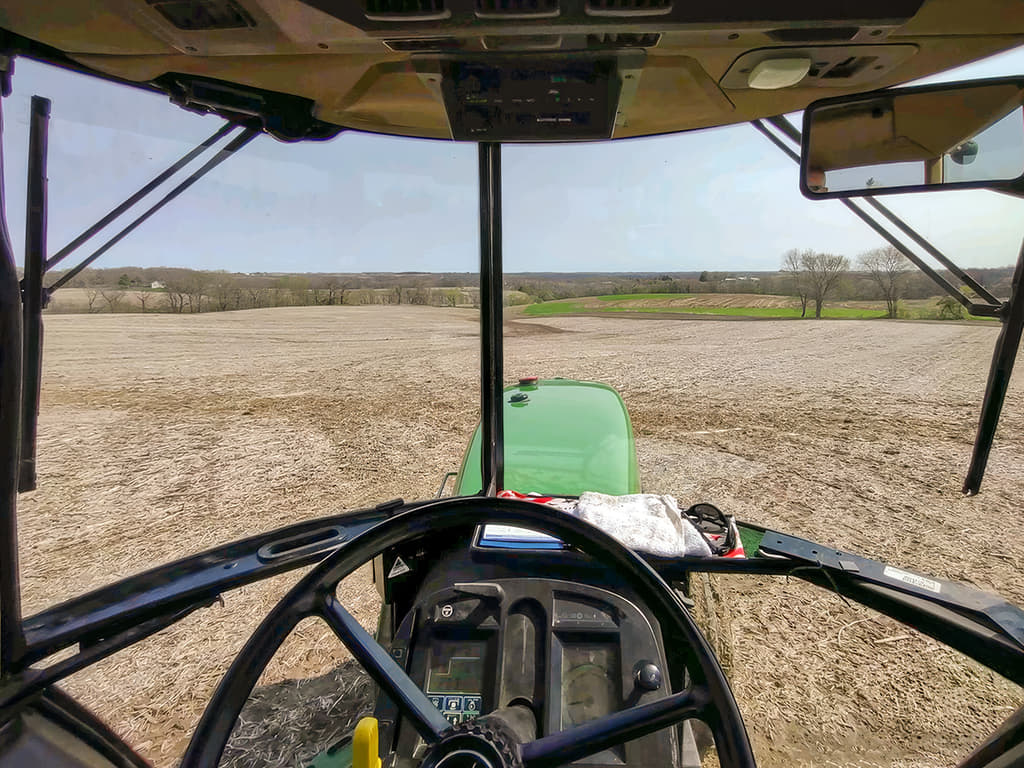
One of the biggest improvements addressed something Deere had fought for decades: visibility. Think about nearly every big Deere that came before it. Something usually stuck through the hood directly in front of the operator. Whether it was an air cleaner, a muffler, or both, there was usually something in the way. Then add the windshield seam in a Sound Gard cab. Basically, you had a little optical obstacle course between you and whatever sat directly ahead.
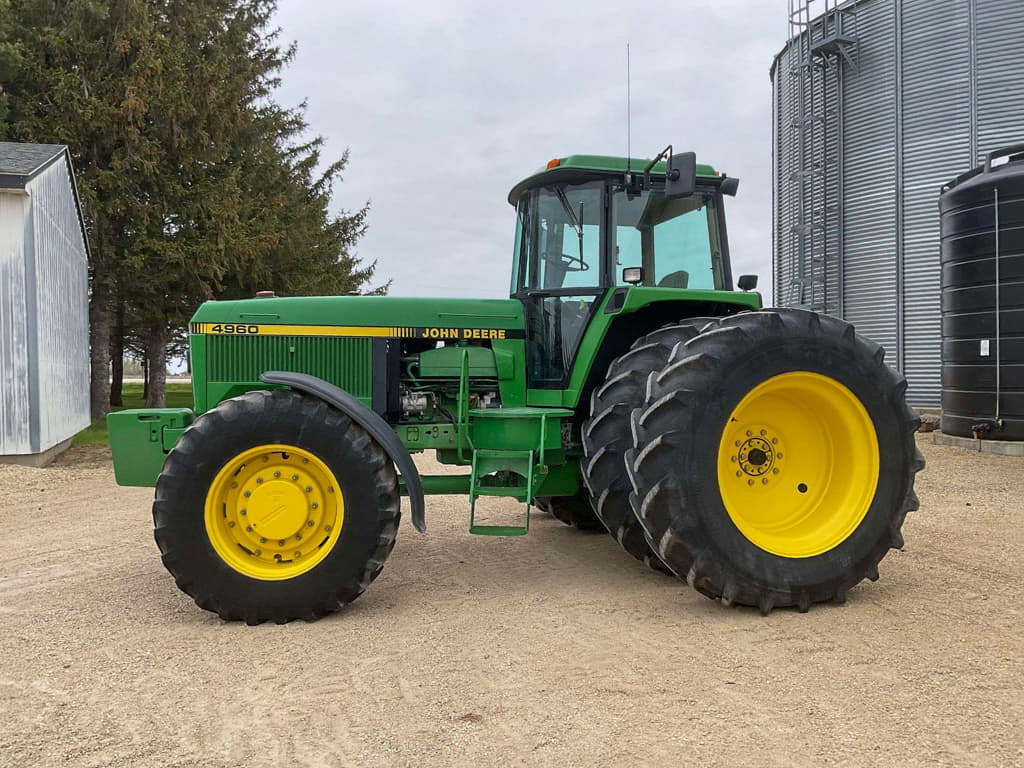
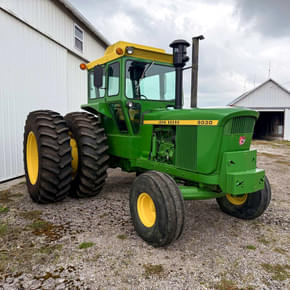
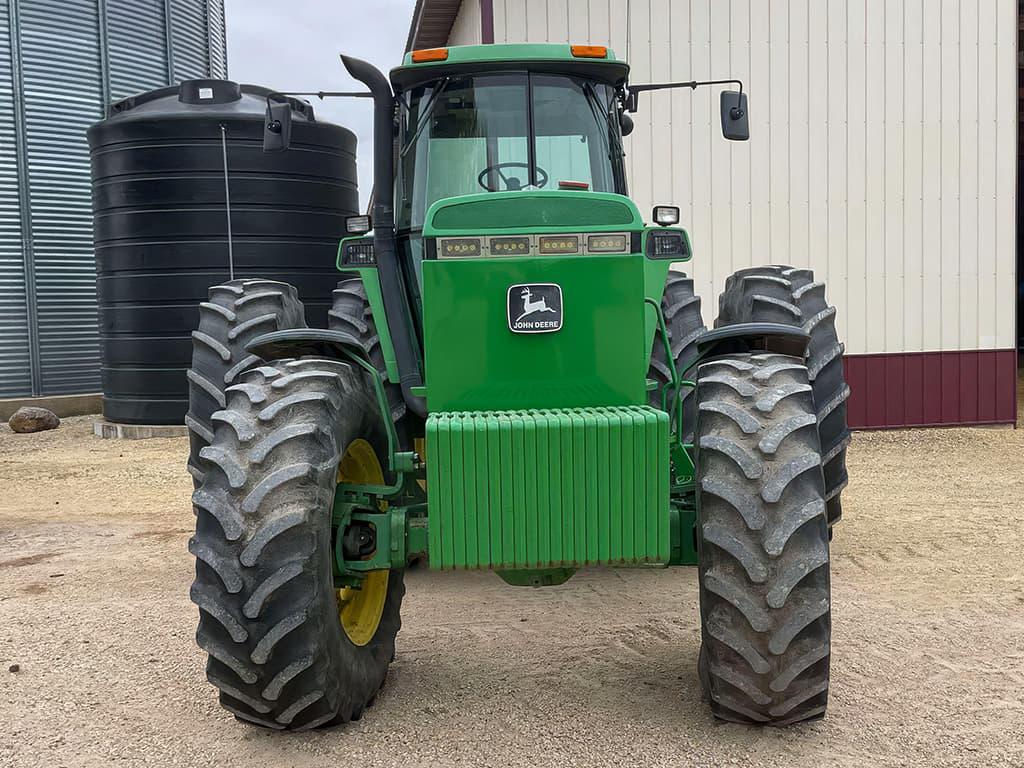
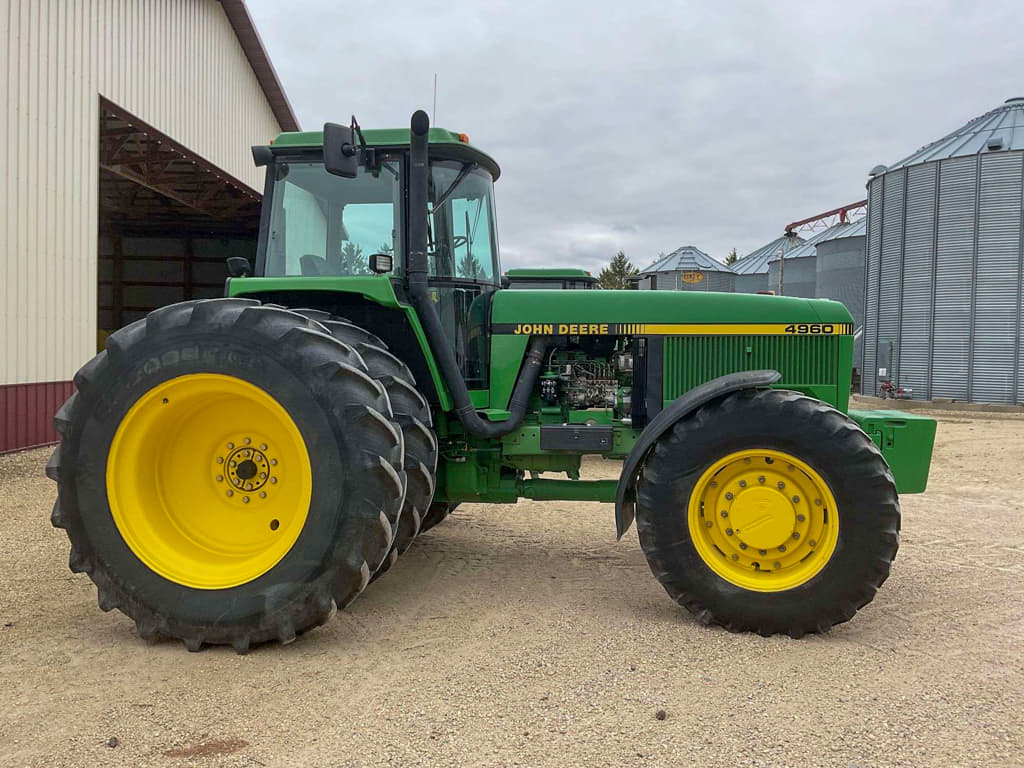
Farmers dealt with it because that’s simply how tractors were built. Deere wasn’t alone, either. Plenty of other manufacturers had the same problem. However, Deere made a substantial improvement with the 60-Series. Engineers moved the intake forward and brought air through the nose of the tractor. That freed up space beneath the hood. As a result, they could tuck the muffler inside. Deere then routed the exhaust up the right side of the cab. Suddenly, it wasn’t sitting directly in the operator’s line of sight.
Was it perfect? No. There was still a window seam. But was it dramatically better than staring around a muffler all day? Definitely.
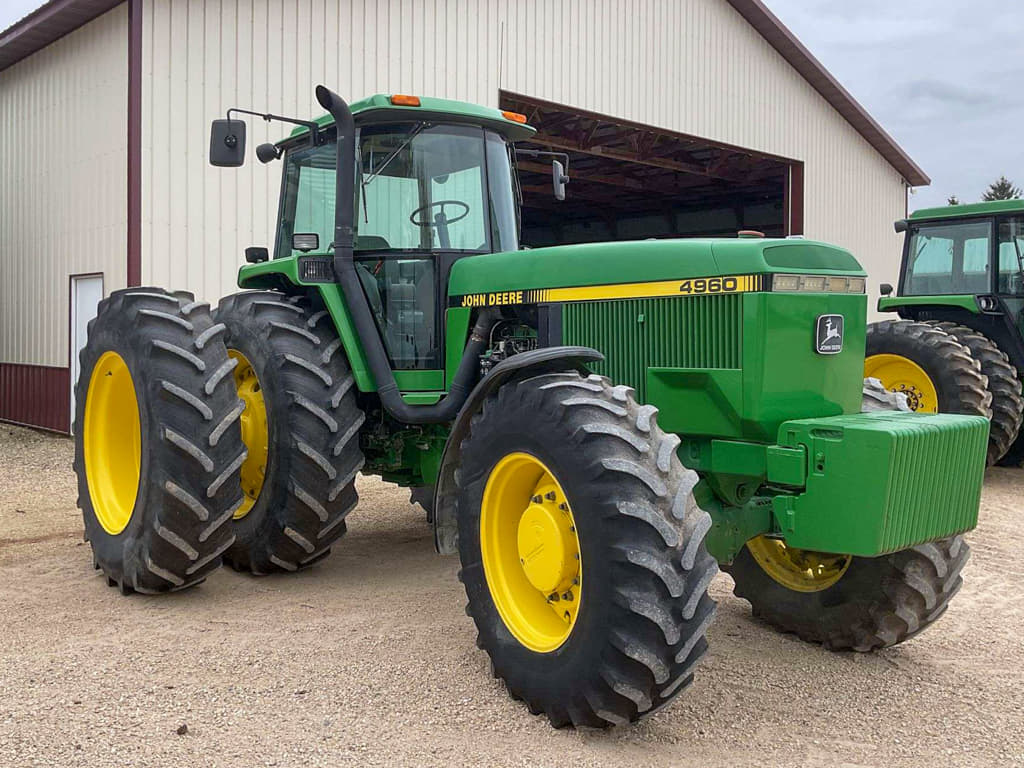
Of course, that exhaust arrangement created another engineering problem. Putting a hot exhaust pipe beside the cab and right front fender wasn’t ideal. So, Deere ceramic-coated the inside of the pipe. That helped control the outside temperature and protected everything nearby. It was a small detail, but it helped make the whole arrangement work.
Plenty of muscle under the hood
Visibility might have been the most obvious change, but Deere didn’t stop there. Under the hood sat the familiar 466-cubic-inch engine. By then, Deere had spent years developing and refining it. The 4960 had roughly 210 PTO horsepower in stock trim. If you listen to the coffee shop farmers, though, there’s plenty of stock tractors with the seal still on the fuel pump that turned 240 horse or better on an M&W dyno pretty regularly.
In other words, they weren’t bashful. Turns out that sometimes fine-tuned perfection occasionally comes with a little attitude, y’know? (Some of you will catch what I did there…)
The MFWD tractors also benefited from Deere’s Caster Action front axle. The system allowed the front wheels to lean as the tractor turned. Consequently, the 4960 could turn surprisingly tight for its size. That’s impressive for a tractor with a 117-inch wheelbase.
Deere sweated some smaller details, too
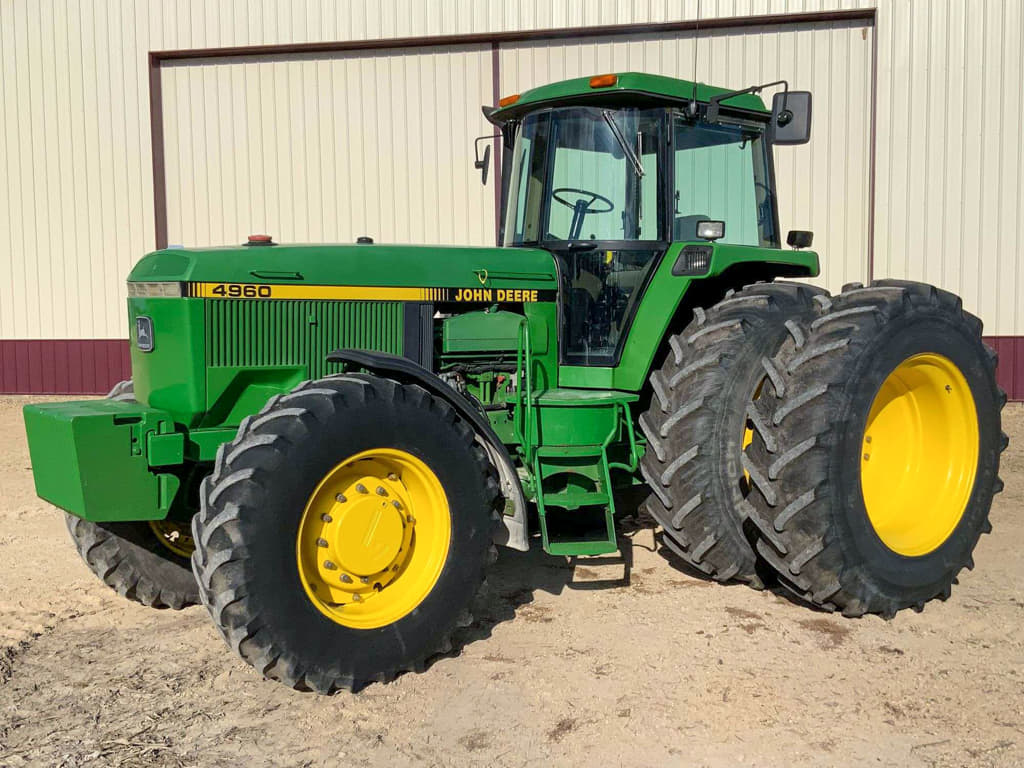
Not every improvement showed up on a spec sheet. For instance, Deere gave the 4960 better steps and a more useful handrail. Those changes made climbing into the Sound Gard cab easier. The steps could also rotate for saddle tanks or different row spacings. They worked well enough that owners retrofitted them to thousands of older Sound Gard and New Generation tractors. New style steps on a 4020 is darn near a mandatory upgrade these days!
Lighting improved, too. Buyers could equip the tractor with substantially better work lights. Those lights provided much better coverage around the tractor at night. Today, that doesn’t sound particularly revolutionary. However, anybody who has worked ground after dark with an older tractor understands the difference good lighting makes.
The 4960 had a few quirks
Of course, Deere didn’t build a perfect tractor. Moving the air intake solved the visibility problem, but it created another issue. The intake system could collect plenty of dust and crop residue. Dirty fall conditions could make the problem especially noticeable. Consequently, owners needed to keep an eye on the air filter.
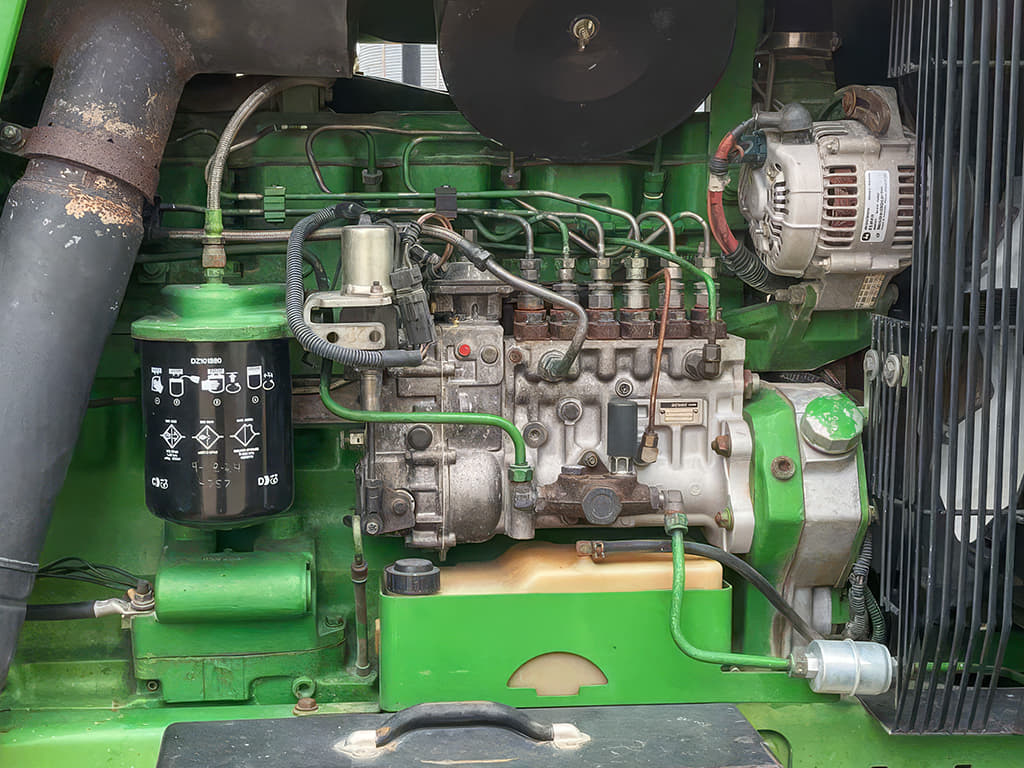
There’s also an interesting wrinkle with the fuel systems. When I originally wrote about these tractors a few years ago, I talked with Jeff Bahl at Slabtown Tractor Repair in Lancaster, Wisconsin. Jeff has spent years working on Sound Gards. He’s probably forgotten more about Deere Powershifts than most of us will ever know. He maintained that the ones to get were the early ones where they came with a mechanical pump and governor. Later tractors used electronic pumps. Plenty have lived perfectly happy lives, but failures can become expensive very quickly. Unfortunately, I haven’t found a tidy published serial-number break for that change.
Then there’s the Powershift itself. They’re tough transmissions, but these tractors are now more than 30 years old. Tough doesn’t mean immortal. Maintenance history matters, and a neglected transmission can turn into a very expensive project. Really, that applies to the entire tractor. At this age, I’d prefer more hours with maintenance records over fewer hours and a mysterious past. Deere designed these tractors to work, wear, get repaired, and go back to work. With proper care, plenty of them can still earn their keep today.
Why people still love the 4960
That durability helps explain why the 4960 still has such a loyal following. The tractor arrived at an interesting point in Deere history. It represented one of the final evolutionary steps for a platform farmers already understood. There weren’t screens everywhere. They didn’t have an enormous learning curve, either. Furthermore, Deere built the tractor with the expectation that somebody would eventually fix worn components.
At the same time, the 4960 offered enough horsepower and traction for serious work. It also had useful hydraulics, decent cab comfort, and enough refinement to remain very usable today. No, it isn’t the most versatile tractor Deere ever built. It’s physically big, and it has a 1000 RPM PTO. Plenty of jobs are easier with something like a 4455. However, if the job calls for an old-school big horse, the 4960 still makes a convincing argument for itself.
I’ve never been a big believer in declaring any tractor the “best ever built.” I mean, technology moves forward for a reason. Newer equipment can do things these tractors never dreamed of doing. Still, I completely understand the 4960’s reputation. By then, Deere had spent nearly 20 years building Sound Gards. The company knew the platform. It knew what worked, and it knew what needed improvement.
With the 60 Series, Deere addressed many complaints without completely reinventing the tractor. Like the brochure said, it really was “fine-tuned perfection.” Imagine what might’ve happened if they’d done the same thing with the small-frame tractors!
Anyway, regardless of all that, let’s look at the one I really wanted to talk about today.
The 4960 you can buy next week…
Dean Darnell is a guy who pays meticulous attention to detail. He believes strongly in the value of maintenance and upkeep, a lesson he learned early from his dad. When he started farming in 1989, he put those practices right to work.
Dean never farmed a ton of acres. Between that and being pretty comfortable wrenching on his own equipment, the formula worked pretty well for him. After a successful harvest last fall, though, Dean decided it was time to retire.
I talked to Dean yesterday, and he told me he’s always been a 55-Series guy. His equipment reflected that, too. He’s had very good luck with his 4455, 4555, and 4955.
About a dozen years ago, though, Dean got on a kick to find a “significant serial number” 55. Ideally, he wanted something like the first or last 4955. He looked for quite a while but never turned anything up. Then, in March 2014, 4960 serial number RW4960P001001 showed up on TractorHouse. In Deere-speak, 1001 means the first production unit, and that was enough to trip Dean’s trigger. No, it wasn’t a 55-Series. However, mechanically speaking, the 60-Series wasn’t much different. In fact, the Nebraska Tractor Test Lab didn’t even retest the models because they were essentially carryovers.
Dean told me, “I really didn’t need the tractor, but I’d always wanted a cool serial number, and I knew I had a fairly easy job for it, too.”
So, he wasted no time getting it bought. He changed the oil on March 18, 2014, with 4,601 original hours showing on the meter. And when Dean said he had an easy job for it, he wasn’t kidding. Twelve years later, the meter shows just 4,780 hours.
Since Dean bought it, the 4960’s only real job has been pulling a pair of Unverferth 630 gravity wagons during harvest. Behind those wagons, he usually pulled a Suzuki Samurai for transportation back from the field. That little Samurai was actually an important part of the operation. Dean farmed about 450 acres by himself, and cheap, reliable transportation helped make that one-man system work.
If you ask him, he’ll also admit he was probably a little over-equipped for 450 acres. However, that was partly by design. Having several capable tractors allowed him to spread the hours around and keep everything ready when he needed it.
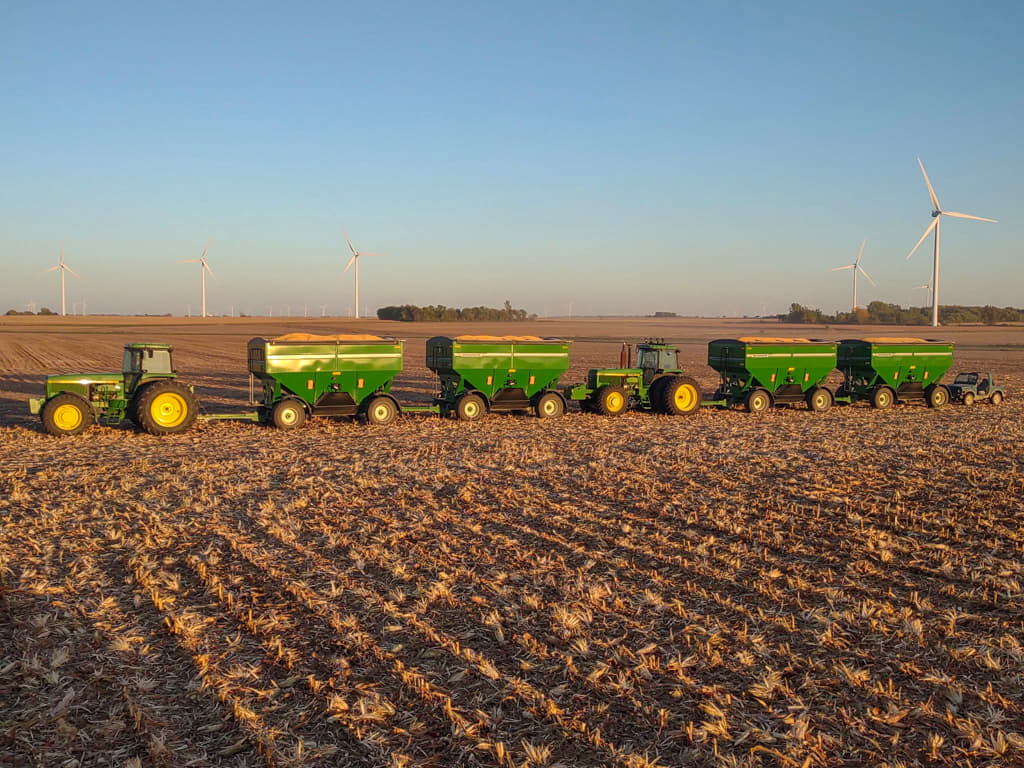
The 4960 already looked good when Dean bought it, and he’s maintained that standard ever since. Aside from very minor touch-up by a previous owner, newer tires, and a replacement cab kit, it remains remarkably original, right down to the paint. And after all these years, it still runs and drives like a champ.
Wrapping up…
At the end of the day number 1001 makes this 4960 historically interesting in and of itself. However, its condition tells you quite a bit about the man who took care of it. Dean’s mantra that if you keep it clean, keep it shedded, and take care of it properly, it’ll return the favor. I’d be shocked if that mantra doesn’t prove to be right on August 20th when the auction happens. All of the equipment on this sale is surgically clean, and I suspect that the bidding will be fast and furious because of it!
Take a look at the auction listing. This is some really nice equipment!