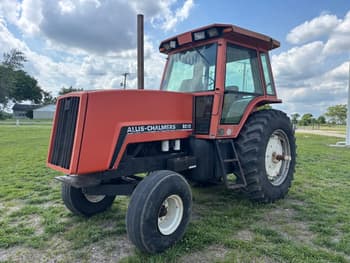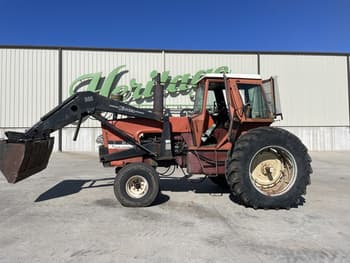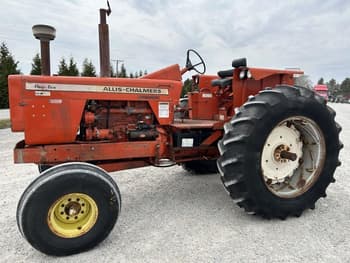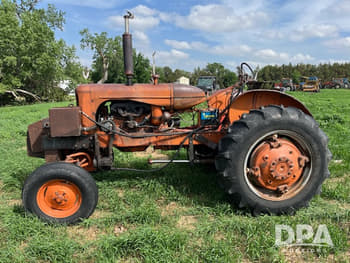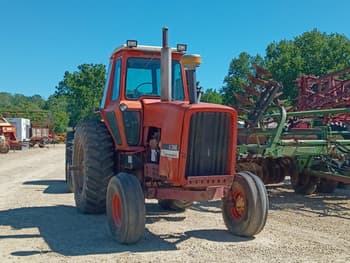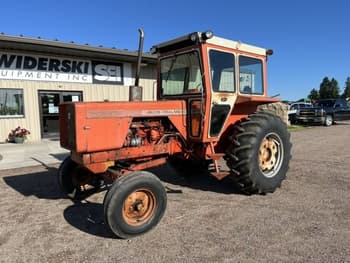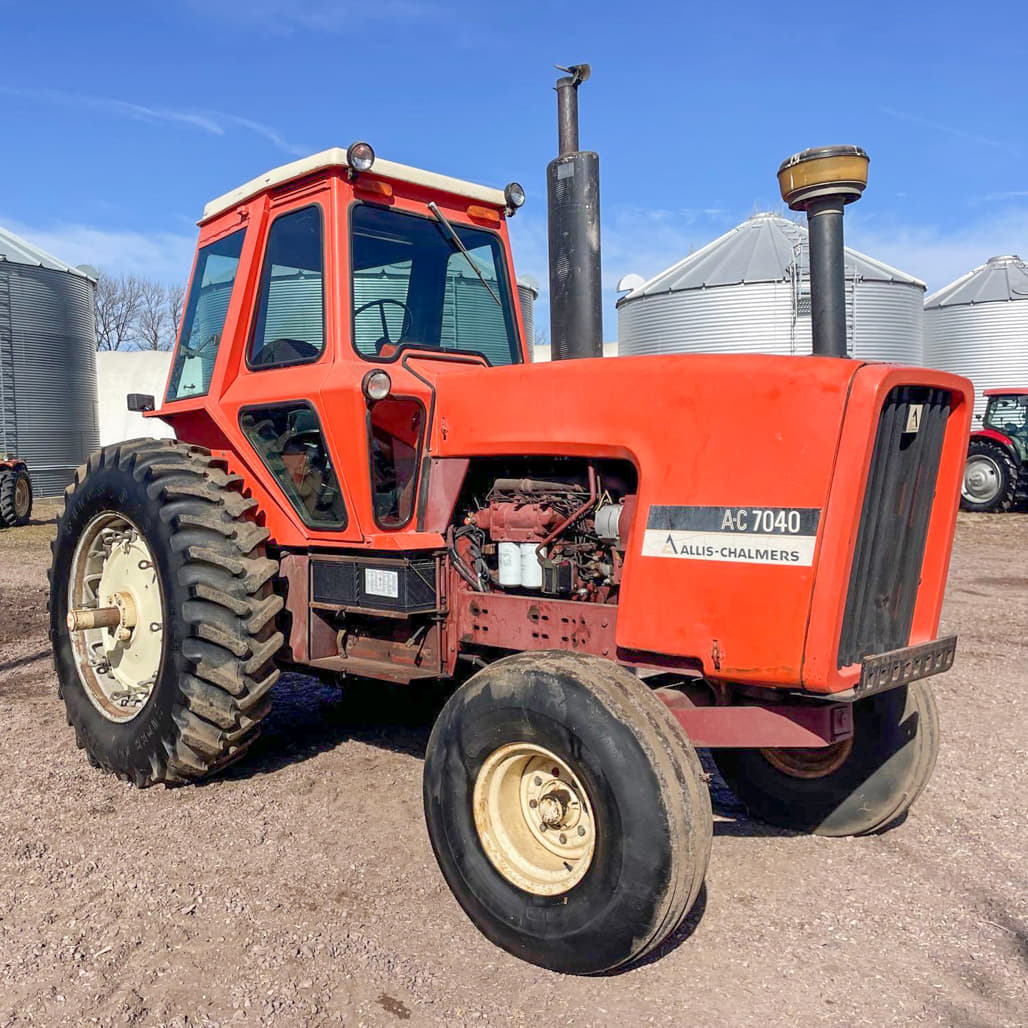
Allis-Chalmers 7040 listings on TZ
They say every tractor has a place in the lineup. And sometimes, the middle ones end up being the most useful. That’s exactly where the Allis-Chalmers 7040 lived.
The Allis-Chalmers 7000-Series
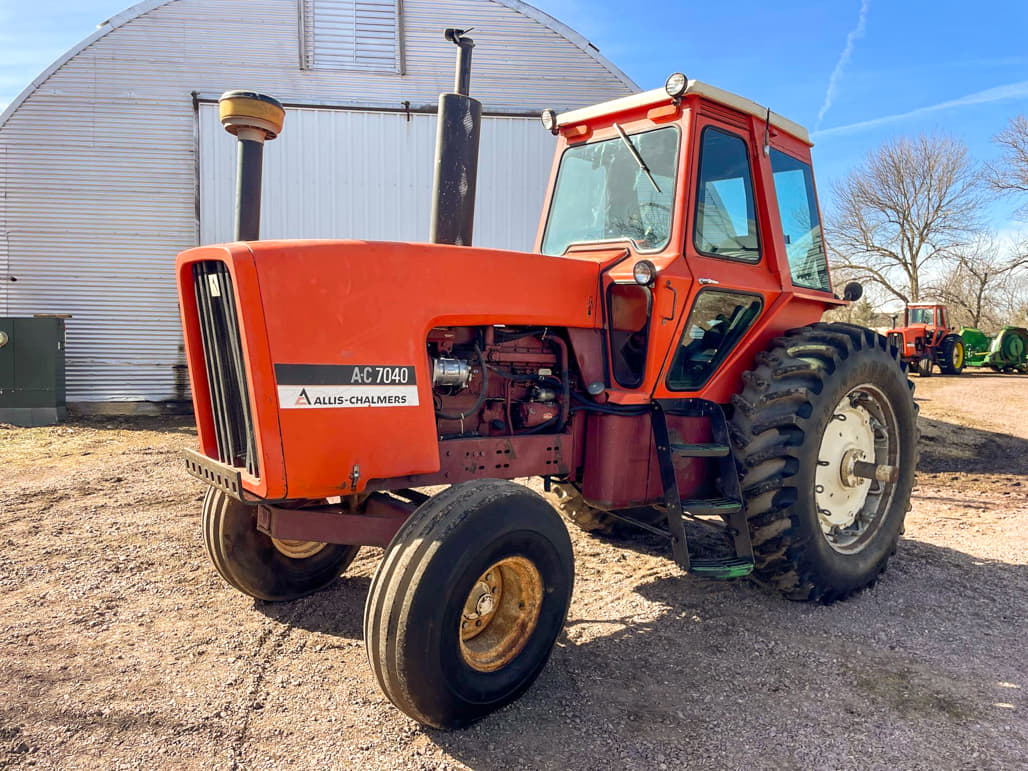
The 7000-series was a big step forward for the Allis-Chalmers, one they’d spent years developing. The “Hundred Series” tractors had some standouts in the sixties and early seventies, but they’d become dated. When the competition was moving forward, dealers were frustrated at having to sell tractors that looked like what they’d sold a decade prior. So when the 7000-Series debuted in 1973 with the 7030, it was a pretty big deal for the company.
The 7000-Series was more or less new from the ground up. The goals were fairly similar to everybody else’s at the time; increased efficiency and a greater focus on operator comfort and safety. To that end, there wasn’t a lot that carried over from the previous models. The 7030 introduced the very modern Acousta-cab, which was built in-house specifically for the line. No longer would they rely on aftermarket cabs to isolate the operator. As a result, operators finally had a nicer place to spend their day. Along those same lines, efficiencies were increased with better hydraulics and more power.
It was a new chassis with all new bits and pieces, including inboard planetaries, wet hydraulic brakes, and a completely re-designed 426 inline six. Like I said…it was a pretty big deal!
The 7040
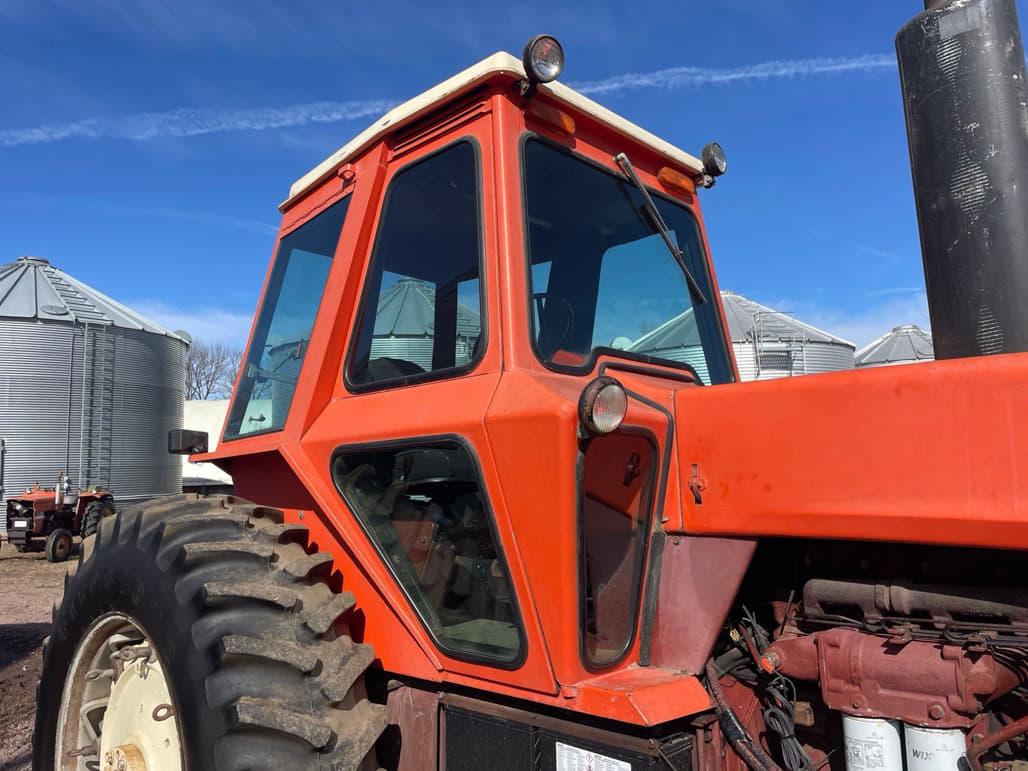
Production ran roughly from 1974 through 1977. That puts it in a fascinating era in agriculture. Farms were getting bigger, implements were getting heavier, and tractors were being asked to do more than ever before.
That’s where the 7040 made a lot of sense. It slotted right in the middle. Not a high-horsepower row crop, but it didn’t need to be. It was built to be the one you used every day. The turbocharged 426 put out about 136 PTO horsepower. It had enough power for tillage work, but was still manageable for PTO jobs. You could put it on a lot of different tasks without thinking twice.
And really, that’s the story of the 7040. It wasn’t a one-trick pony.
From a transmission standpoint, buyers had options. You could get a 12-speed partial powershift or a 20-speed Power Director. While I don’t know it for certain, most seem to have been built with the Power Director. It gave farmers a wider range of usable speeds in the field, which is where it mattered.
Hydraulics were another strong point. The 7000-series introduced a pressure and flow compensated system, which was pretty advanced for the time. Even better, it proved to be quite capable of keeping up with newer implements.
Weight-wise, the 7040 came in around 11,700 pounds bare. With ballast, you could push it north of 17,000, giving it solid footing in the field. In practice, it could easily be the main tractor on a mid-sized farm in the late ’70s. It had enough power for spring tillage, could pull wagons in the fall, and handled a baler or a grinder in between. Pretty versatile, from where I’m sitting!
Today
Even today, you’ll hear similar feedback from owners. They like the versatility. It’s a lot like a 4440—small enough to handle a wide range of jobs, but able to punch above its weight when needed.
The 426 is fairly reasonable in terms of maintenance and reliability at stock power levels. That’s both an acknowledgement and a warning. Turn them up too far, and they’ve been known to send the #3 rod through the block. But when used responsibly, they’re solid, versatile tractors with a good set of creature comforts.
Looking back, these mid-range tractors helped define what a row-crop tractor needed to be going forward. Power, capability, and comfort.
And in that sense, the 7040 delivered.
Which brings us to the one we’ve been looking at in the photos thus far.
Because when you find a clean, one-owner 7040, it usually tells a story. A tractor that handled a little bit of everything, year after year, without much fuss.
And that’s exactly the kind worth taking a closer look at.
Doug & Mary Berg’s Allis-Chalmers 7040
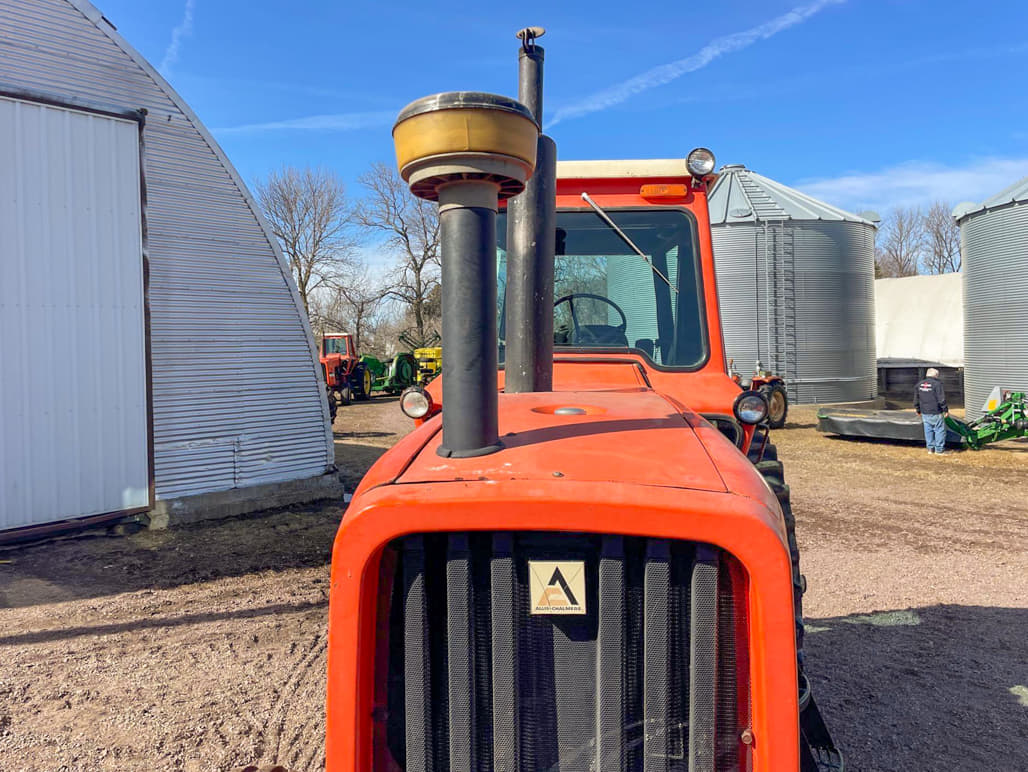
Which brings us to Doug and Mary Berg. This August, they’ll celebrate their 60th wedding anniversary. Doug’s been farming for 62 years—hogs, cattle, and a mix of corn and beans. The kind of operation that kept them busy year-round.
And normally you’d expect that that kind of time shows up in the equipment. That’s the thing about this lineup, though. It doesn’t. The newer pieces are about as clean and low-houred as you’ll find. Even the older iron is well kept. Nothing flashy. No “Cadillac” type tractors, if you will. Just practical, dependable machines that were bought to work and taken care of along the way.
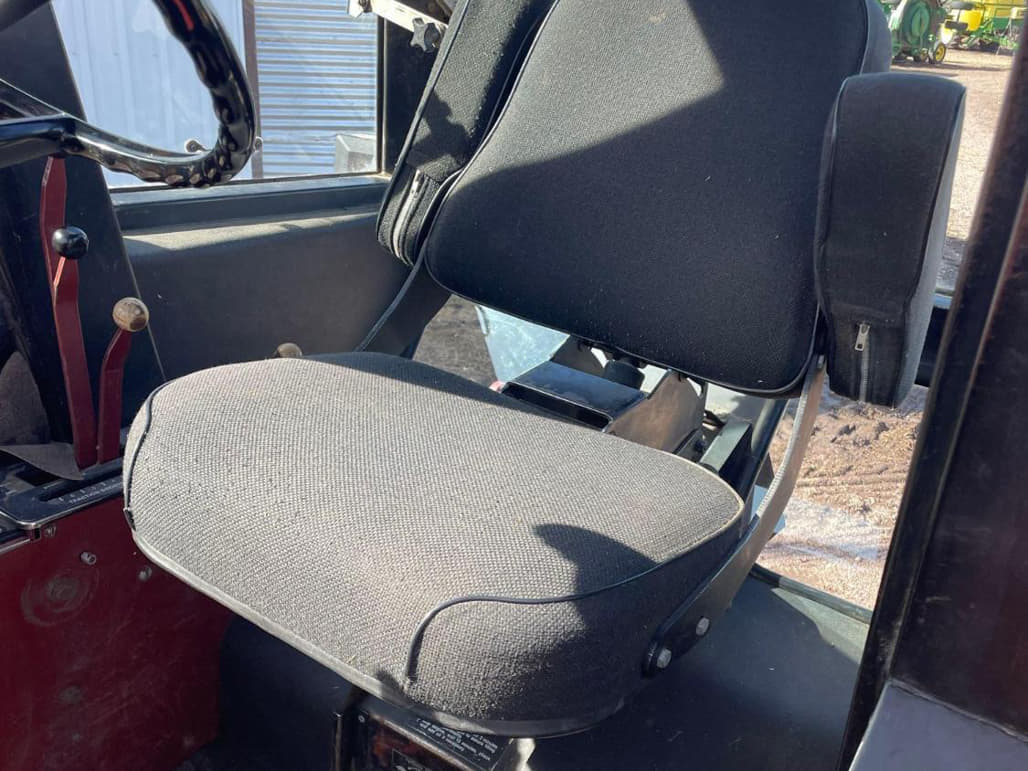
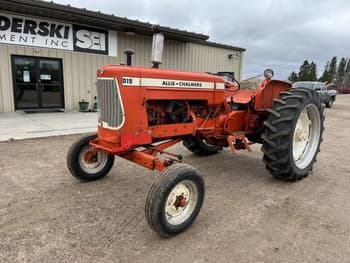
Doug was an Allis guy for most of his career. He started with a used D15 gas, which is still on the sale. He bought his first 7040 new in 1976, then added a second one—a ‘74 model—not long after. Those two tractors handled the bulk of the work for years. When the Allis dealer in Rock Rapids closed, he gradually made the shift to Deere. That’s where most of the later equipment comes from.
The two 7040s have both been recently overhauled and remain in excellent condition. They were serviced every spring at Dan’s Repair in Rock Rapids, and it shows. Mary kept detailed records on everything—service work, maintenance, the whole works.
Final thoughts…
And as much as this sale is about the equipment, it’s also about a transition.
Farming today is a younger, more technical game. Doug and Mary know that, and they’ve chosen to make the practical decision to step away from it and call it a career.
It’s practical, yes, but I doubt that makes it easy.
In talking with them a little, I could sense that maybe this next chapter feels a little uncertain. Maybe even a little uncomfortable. Doug even says in Mark Zomer’s auction preview video, “A couple weeks after the sale, I have a funny feeling that I’m gonna be lost.”
But at the same time, it feels like the right call, too. And when you put all of that together—the years, the care, the consistency—you end up with something that’s getting harder to find. It’s not just clean equipment. But equipment that came from people who took pride in doing things the right way. And at the end of the day, that’s exactly the kind of folks you want to buy a machine from.
The retirement sale takes place on April 3, 2026 at the home farm just north of Rock Rapids, IA. Take a look at the lineup; it’s pretty stellar from top to bottom!
Doug & Mary Berg’s Retirement Auction